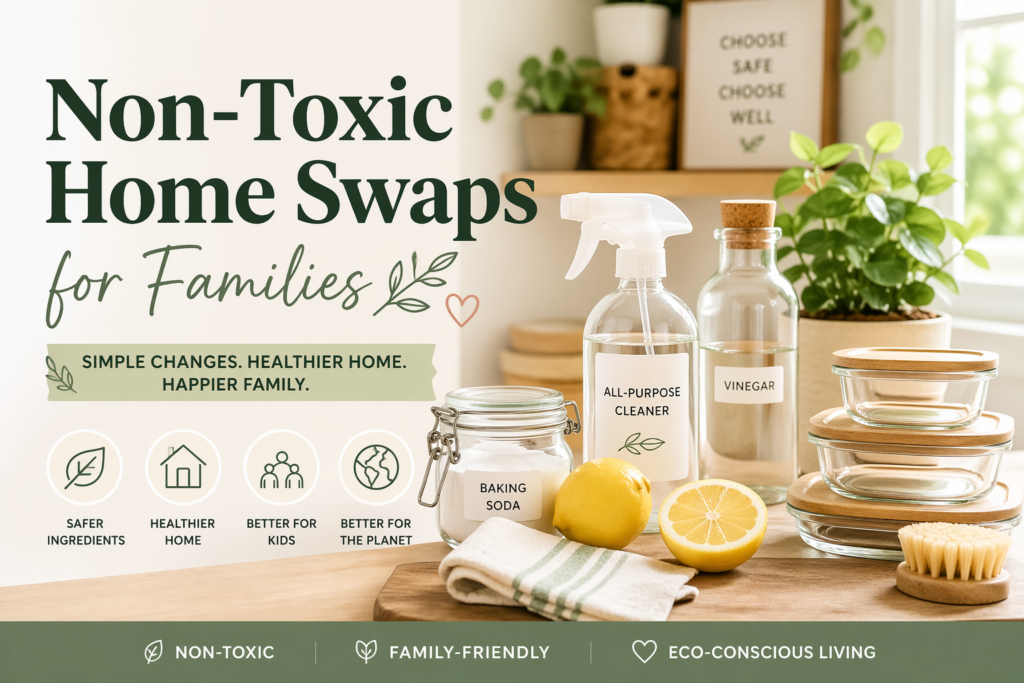

Creating a healthier home doesn’t require a full lifestyle overhaul. For families—especially those with young children—small, practical swaps can significantly reduce exposure to harsh chemicals while keeping daily life manageable. 👶✨
Why Go Non-Toxic? 🤔
Many conventional household products contain ingredients linked to allergies, hormone disruption, or respiratory irritation. Kids are particularly vulnerable because their bodies are still developing and they tend to have more contact with surfaces, floors, and objects. 🧸
The goal isn’t perfection—it’s progress. Every safer swap reduces overall exposure. 💚
Kitchen Swaps 🍽️
1. Ditch Non-Stick Cookware 🍳
Traditional non-stick pans can release harmful compounds when overheated.
Swap for:
- Stainless steel
- Cast iron
- Ceramic-coated cookware
These options are durable and free from questionable coatings. ✅
2. Replace Plastic Food Storage 🥡
Plastic containers can leach chemicals, especially when heated.
Swap for:
- Glass containers with silicone lids
- Stainless steel lunchboxes
Bonus: they last longer and don’t absorb odors. ♻️
3. Upgrade Cleaning Products 🧼
Many kitchen cleaners contain strong synthetic fragrances and irritants.
Swap for:
- Vinegar + water solution
- Baking soda for scrubbing
- Plant-based cleaners with simple ingredient lists
Bathroom Swaps 🚿
4. Simplify Personal Care Products 🧴
Shampoos, soaps, and lotions often contain sulfates, parabens, and artificial fragrances.
Swap for:
- Fragrance-free or naturally scented products
- Bars with minimal ingredients
- Products labeled for sensitive skin
5. Switch to Safer Toothpaste 🪥
Some toothpastes contain unnecessary additives or harsh ingredients.
Swap for:
- Fluoride toothpaste with clean ingredient lists (for kids, age-appropriate formulas)
- Tablets or powders with fewer additives
6. Rethink Air Fresheners 🌬️
Plug-ins and sprays can release volatile organic compounds (VOCs).
Swap for:
- Open windows for ventilation
- Essential oil diffusers (used sparingly)
- Baking soda to absorb odors
Laundry Room Swaps 🧺
7. Choose a Gentle Detergent 👕
Conventional detergents can leave residues that irritate skin.
Swap for:
- Fragrance-free, hypoallergenic detergent
- Powder formulas with fewer additives
8. Skip Fabric Softener 🧻
Liquid softeners often contain synthetic fragrances and coatings.
Swap for:
- Wool dryer balls
- A splash of white vinegar in the rinse cycle
Living Areas 🛋️
9. Reduce Dust & Toxins 🧹
Dust can carry chemicals from household products.
Try:
- HEPA filter vacuum
- Damp dusting instead of dry dusting
10. Be Mindful with Furniture 🪑
Some furniture and rugs may off-gas chemicals.
Look for:
- Solid wood over pressed wood
- Certifications for low emissions
- Secondhand items (already off-gassed)
Kids’ Spaces 👶🎨
11. Safer Toys 🧩
Some plastics and paints may contain harmful substances.
Swap for:
- Wood, silicone, or certified non-toxic plastics
- Reputable brands with safety testing
12. Non-Toxic Art Supplies 🎨
Kids love to create—but some supplies contain solvents or dyes.
Choose:
- Washable, non-toxic labeled products
- Beeswax crayons or natural paints
Final Thoughts 💭
A non-toxic home isn’t about throwing everything out overnight. Start with the products you use most often and replace them gradually. Small, consistent changes add up—and they create a safer, more comfortable space for your whole family. 🌱💕