
🧠💼👨‍👩‍👧 Balancing Work, Kids, and Mental Space

There are days when life feels like a perfectly choreographed dance.
And then there are the days when someone spills juice on your laptop while you’re late for a meeting and answering an email with one hand while searching for a missing shoe with the other. 😅

Balancing work, parenting, and your own mental well-being isn’t about “having it all together.” It’s about learning how to move through the chaos with a little more grace — and a lot more self-compassion.

☀️ The Myth of Perfect Balance

Let’s be honest: balance doesn’t always look balanced.

Some days your work gets the best of you.
Other days your kids need every ounce of your energy.
And sometimes your brain simply says, “Nope, we’re running on fumes today.” 🪫

That’s normal.

Instead of chasing perfection, try aiming for presence. Being fully engaged in the moment you’re in — even if that moment is messy.

📅 Structure Helps (But Flexibility Saves You)

Schedules are helpful. Kids thrive on routines. Work deadlines matter.

But rigid expectations? They can quietly become stress factories. 🏭

A few things that genuinely help:

  • 📝 Prioritize the “must-do” tasks
  • ⏰ Leave buffer time between activities
  • 🍎 Simplify meals when life gets busy
  • 📵 Put the phone down during family moments
  • 🙋 Ask for help before burnout arrives

You do not need to optimize every second of your day.

🧩 Mental Space Matters Too

Mental space is the invisible thing most parents and professionals are missing.

It’s not just physical exhaustion — it’s the endless tabs open in your brain:

  • school forms
  • grocery lists
  • deadlines
  • doctor appointments
  • remembering whose turn it is for soccer pickup ⚽

Your mind deserves rest too.

That might mean:

  • 🚶 Taking a walk without headphones
  • 📖 Reading for 10 minutes before bed
  • ☕ Drinking coffee while it’s still hot
  • 🤍 Saying “no” without guilt
  • 🛏️ Going to sleep instead of doom-scrolling

Small pauses are powerful.

👶 Your Kids Don’t Need a Perfect Parent

They need a present one.

Kids remember connection far more than perfection:

  • 🍪 baking cookies together
  • 😂 laughing at silly jokes
  • 🎨 messy art projects
  • 📚 bedtime stories
  • 🤗 hugs after hard days

You are already teaching resilience, love, and humanity simply by showing up.

💡 A Gentle Reminder

You are allowed to:

  • rest
  • reset
  • ask for support
  • change your priorities
  • protect your peace

Balancing work, kids, and mental space is not a final destination. It’s an ongoing adjustment — one season at a time. 🌿

And if today felt overwhelming?
Tomorrow is another chance to begin again. ✨

Simple Morning Routines That Actually Stick ☀️✨

We’ve all seen those perfect morning routines—the 5AM wake-ups, journaling, green juice, workout, meditation… all before the kids even open their eyes 😅

And while that sounds amazing in theory, real life? It’s a little different.

If you’ve ever tried to overhaul your entire morning and gave up by day three, you’re not alone. The secret isn’t doing more—it’s doing what actually works for you 🤍

Here are simple morning routines that are realistic, flexible, and (most importantly) stick:


🌿 1. Start Smaller Than You Think
Forget the hour-long routine. Start with just one habit.

Maybe it’s:

  • Drinking a glass of water 💧
  • Opening the curtains for natural light ☀️
  • Taking 3 deep breaths before grabbing your phone

Small wins build consistency—and consistency builds routine.


⏰ 2. Give Yourself a 10-Minute Head Start
You don’t need to wake up at 5AM. Just try 10 minutes earlier.

That tiny pocket of quiet can help you:

  • Wake up without rushing
  • Mentally prepare for the day
  • Enjoy a sip of coffee while it’s still warm ☕

📱 3. Don’t Start With Your Phone
This one’s hard—but powerful.

Instead of scrolling first thing, try:

  • Stretching
  • Sitting in silence
  • Thinking about one thing you’re grateful for 🤍

Your mood in the morning sets the tone for your entire day.


🧺 4. Stack Your Habits
Attach a new habit to something you already do.

For example:

  • While your coffee brews → take a few deep breaths
  • After brushing your teeth → say a simple affirmation
  • While making breakfast → play calming music 🎶

No extra time needed—just better use of what’s already there.


👶 5. Keep It Real (Especially With Kids)
If you’re a mom, routines need flexibility.

Some mornings will look like:

  • Quiet coffee and calm energy ☕✨

Others will look like:

  • Spilled cereal, missing socks, and someone crying 😅

Both are normal. Both count.


📝 6. Choose 2–3 “Non-Negotiables”
Instead of a long checklist, pick a few things that matter most.

Example:

  • Drink water 💧
  • Get dressed (even if it’s comfy!) 👕
  • Step outside for fresh air 🌿

That’s it. Anything extra is a bonus.


💛 7. Make It Feel Good, Not Perfect
If your routine feels like pressure, you won’t stick to it.

Light a candle 🕯️
Play your favorite playlist 🎶
Wrap up in a cozy blanket

Your morning should feel like support—not a test you can fail.


✨ Final Thoughts
The best morning routine isn’t the most productive one—it’s the one you can actually keep.

Start small. Stay flexible. Give yourself grace.

Because a “good” morning doesn’t have to be perfect… it just has to work for you 🤍

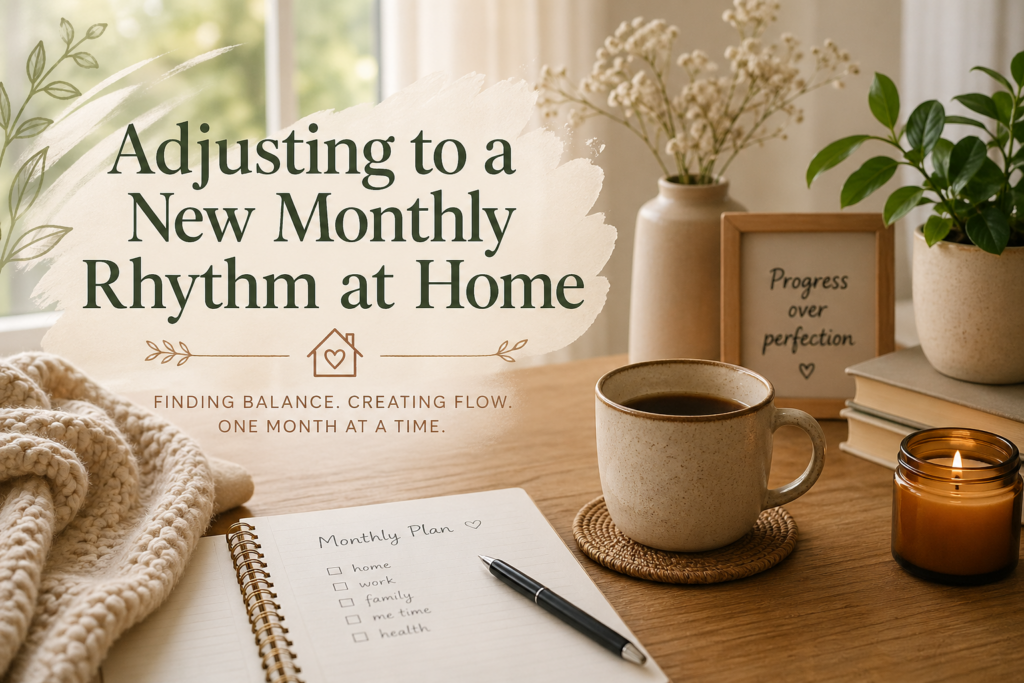
Adjusting to a New Monthly Rhythm at Home 🌿🏡

Life at home doesn’t always run on a steady beat. Sometimes it shifts—quietly or suddenly—and we find ourselves needing to adjust to a new monthly rhythm. Maybe schedules have changed, routines feel different, or priorities at home have been reshuffled. Whatever the reason, finding your footing again is less about “getting it perfect” and more about learning a new flow.

🌱 Starting with awareness

The first step is simply noticing what has changed. Noticing sounds simple, but it’s powerful.
What used to work in your weekly or monthly routine that no longer fits? Where does the day feel rushed, and where does it feel empty?

Sometimes writing it down helps make the invisible visible.

🗓️ Redefining the structure

A monthly rhythm doesn’t have to be rigid. Think of it more like a flexible framework:

  • Household tasks grouped differently
  • New time blocks for work, rest, or family
  • A gentler approach to planning ahead

Instead of forcing your old structure to fit, you reshape it around your current life.

🧺 Embracing “good enough” routines

Not every day will feel balanced—and that’s okay. Some weeks will lean heavily into productivity, others into recovery or family needs. A new rhythm often includes more acceptance of “good enough” days instead of perfect ones.

Small routines help here:

  • A weekly reset moment 🧹
  • A quiet check-in with yourself ☕
  • A simple planning session once a week or month 📒

🌤️ Making space for unpredictability

A stable rhythm doesn’t mean a predictable life. Especially at home, things shift constantly. Kids get sick, work changes, energy fluctuates.

Leaving a bit of breathing room in your schedule can make a big difference. Think of it as padding, not waste.

🌼 Letting it settle over time

Adjusting doesn’t happen all at once. A new monthly rhythm is something you grow into. At first, it might feel awkward or uneven. Over time, though, it starts to feel more natural—like a pattern your life recognizes even before you do.

Give it time. Let it evolve.


At home, rhythm isn’t about control—it’s about creating a pace that supports the life you’re actually living right now. And that can change, month by month, in ways that slowly start to feel just right. 🌙

How to Stay Patient as a Parent 🌿👨‍👩‍👧‍👦

Parenting is beautiful—but let’s be honest, it can also be loud, messy, and emotionally draining. Patience doesn’t magically appear; it’s something you build in small moments, especially when things feel overwhelming.

Here are some grounded, realistic ways to stay patient as a parent without pretending everything is calm all the time.


1. Pause before you react ⏸️

When emotions spike, your first reaction is usually the strongest—but not always the most helpful.

Try this:

  • Take one slow breath in
  • Exhale longer than you inhaled
  • Respond after the initial surge passes

Even a 3-second pause can change the entire tone of a situation.


2. Remember: behavior is communication 🧠

Kids don’t always have the words for what they feel. What looks like “defiance” is often:

  • Overwhelm
  • Tiredness
  • Hunger
  • Need for attention

When you reframe behavior as communication, frustration often softens into understanding.


3. Lower the perfection bar 🎯

A peaceful home doesn’t mean constant calm or perfectly behaved children.

Some days success looks like:

  • Everyone fed 🍽️
  • Nobody seriously hurt 🤕
  • You made it through bedtime 🛏️

That’s enough.


4. Create small reset moments 🌬️

You don’t need an hour of self-care. You need tiny resets throughout the day:

  • Step into another room for 30 seconds
  • Sip water slowly
  • Stretch your shoulders
  • Look out a window for a moment

These micro-breaks prevent emotional overload from building up.


5. Speak to yourself like you would to your child 💛

If your child struggled, you wouldn’t say:

“What is wrong with you?”

So don’t say it to yourself either.

Try:

“This is hard right now, but I can handle the next step.”


6. Expect triggers—and plan for them 🧩

There are always repeat situations that test your patience:

  • Morning rushes
  • Homework time
  • Bedtime resistance

Instead of hoping they won’t be hard, plan for them:

  • Prepare earlier
  • Simplify choices
  • Build routines that reduce chaos

Less friction = more patience.


7. Repair is more important than perfection 🤝

You will lose patience sometimes. Every parent does.

What matters most is what comes after:

  • “I shouldn’t have raised my voice.”
  • “I was feeling overwhelmed, but I’m here now.”
  • “Let’s try again.”

Repair builds emotional safety far more than perfection ever could.


Final thought 🌱

Staying patient as a parent isn’t about never getting frustrated. It’s about coming back—again and again—with a steadier heart.

Small pauses. Small shifts. Repeated daily.

That’s what makes the difference.

🔥 Finish the Month Strong 🔥

The month isn’t over yet—and neither are you 💪✨
No matter how it started, you still have time to show up, refocus, and end it with intention.

Here are some simple motivation tips to help you close the month strong 👇

🎯 Focus on what still matters
Forget what didn’t happen—what can you still accomplish?

📝 Make a short, realistic list
3–5 priorities. That’s it. Keep it doable and clear.

⏳ Use small pockets of time
Even 10–15 minutes of focused effort adds up fast.

🚫 Drop perfection
Done is better than perfect—progress wins every time.

🔁 Reset your mindset daily
Each morning = a fresh chance to show up differently.

🎧 Create a “get it done” vibe
Music, a clean space, or a quick plan—set yourself up to focus.

👏 Celebrate small wins
Every step forward counts. Don’t wait until the end to feel proud.

💭 Remember your “why”
Reconnect with the reason you started—it’s still there.

You don’t need a perfect month—just a strong finish 💯
Let’s go all in for these last days 🚀

#FinishStrong #MonthlyGoals #StayMotivated #ProgressNotPerfect

🌸 How I Stay Organized as a Busy Mom (Without Perfectionism) 🌸

Let’s be honest…
“organized mom life” is not about color-coded perfection or having everything together 100% of the time 😅

It’s about systems that keep life moving—even when things get messy 💛

Here’s what actually helps me stay on track as a busy mom 👇


🧠 1. I stopped aiming for perfect

This was the biggest shift.

Not everything needs to be:

  • perfectly clean 🧼
  • perfectly planned 📅
  • perfectly on time ⏰

Now I aim for: “good enough to function”

And honestly? Life got easier instantly 😌


📋 2. One simple daily list (not 20 tasks)

Instead of overwhelming to-do lists, I write:

✨ 3 MUST-DO things per day:

  • one home task 🏡
  • one kid-related task 👶
  • one personal task ☕

That’s it.

If I do more, great.
If not, I still win the day.


🍞 3. Repeating routines = less stress

I used to overthink every day.

Now I repeat simple patterns:

  • same breakfast options on rotation 🍌
  • same evening routine 🌙
  • same school prep system 🎒

Less decision-making = less chaos in my brain 😅


📦 4. “Zones” instead of perfect cleaning

Instead of cleaning the whole house, I focus on zones:

  • kitchen = functional 🍽️
  • living room = livable 🛋️
  • kids’ area = contained chaos 😂

Not perfect. Just workable.

And that’s enough.


⏳ 5. I plan in real time, not fantasy time

I stopped pretending I have:

  • extra hours ⏰
  • quiet mornings 🌿
  • uninterrupted focus 😅

Now I plan for REAL life:

  • interruptions
  • noise
  • unexpected messes

And suddenly… I feel less behind.


💛 6. I give myself permission to pause

Not every day needs productivity.

Some days are for:

  • surviving 😅
  • cuddling kids 🤍
  • sitting in silence ☕

And that still counts as a successful day.


🌷 Final thought

Being an organized mom doesn’t mean doing everything.

It means:
✨ making life easier where you can
✨ letting go where you can’t
✨ and choosing peace over perfection

And honestly? That’s more than enough 💛


If you want, I can also:

  • turn this into a viral short Facebook post version
  • or create 10 similar blog posts for your content library
  • or adapt it into a carousel post for Instagram/Facebook growth

blog post with emojis: How to Create a Balanced Routine

🌿 How to Create a Balanced Routine (Even as a Busy Mom) 🌿

Let’s be real—“balanced routine” sounds amazing… until real life shows up 😅
Kids wake up early, plans change, and suddenly your schedule goes out the window.

But balance isn’t about perfection.
It’s about creating a rhythm that works with your life, not against it 💛

Here’s how I build a balanced routine without burning out 👇


☀️ 1. I start with anchors, not strict schedules

Instead of planning every minute, I focus on anchor points in the day:

  • Morning routine 🌅
  • Mealtimes 🍽️
  • Bedtime 🌙

Everything else flows around these.

This gives structure without pressure.


🧠 2. I plan energy, not just time

Not all hours feel the same 😅

So I ask:

  • When do I have the most energy? ⚡
  • When do I feel drained? 💤

Then I match tasks:

  • High energy → cleaning, errands, planning
  • Low energy → folding laundry, relaxing tasks, kid time

It makes everything feel easier.


🧺 3. I stopped overloading my day

My old routine had too many “must-dos” 😵‍💫
Now I keep it simple:

✨ 3 priorities per day:

  • one home task 🏡
  • one kid task 👶
  • one personal task ☕

Everything else is optional.


🧸 4. I build in flexibility (this is key!)

No routine survives kids without flexibility 😂

So I always allow:

  • delays
  • interruptions
  • plan changes

Instead of feeling behind, I adjust and continue.

That shift changed everything.


🌿 5. I include reset moments

Balance isn’t just about doing things—it’s about pausing too.

My small resets look like:

  • 5-minute coffee break ☕
  • short walk outside 🚶‍♀️
  • sitting in silence (yes, really 😌)

These tiny breaks prevent burnout.


🕰️ 6. I use routines, not rigid schedules

There’s a big difference:

❌ Rigid schedule = stressful
✅ Routine flow = flexible + calming

So instead of:
“2:00 PM = clean kitchen”

I think:
“Afternoon = tidy reset if possible”

Much more realistic.


💛 Final thought

A balanced routine isn’t something you “achieve once and for all.”

It’s something you:
✨ adjust
✨ simplify
✨ rebuild when life changes

Some days feel smooth.
Some days feel chaotic.

But both are still part of a balanced life 🌿

Because balance isn’t perfection…
it’s consistency with kindness toward yourself 💛

🌙 Creating Calm Evenings With Kids (Without Losing Your Mind 😅)

Evenings with kids can feel like a second shift—dinner, mess, bath time, bedtime negotiations… and somehow everyone is tired except the kids 😂

But calm evenings aren’t about perfection. They’re about small habits that lower the chaos just enough to breathe again 💛

Here’s what actually helps create calmer evenings at home 👇


🍽️ 1. I simplify dinner on purpose

I used to aim for “proper meals” every night… and it stressed me out 😵‍💫

Now I focus on:

  • quick meals 🍝
  • repeat favorites 🔁
  • zero guilt about simplicity

Sometimes it’s pasta. Sometimes it’s “snack dinner.”
And honestly? Everyone survives just fine 😌


🧺 2. I do a mini reset before bedtime chaos starts

Not a deep clean—just a 10-minute reset:

  • dishes into the sink 🍽️
  • toys into one basket 🧸
  • surfaces cleared a little 🧼

It doesn’t make the house perfect…
but it makes tomorrow morning feel kinder.


🛁 3. Bath time becomes slow time (when possible 😅)

Instead of rushing, I try to make bath time a signal that the day is slowing down:

  • warm water 💦
  • soft lighting 🌙
  • calm voices (when I remember 😂)

It helps shift the energy from chaos → calm.


📵 4. I reduce stimulation before bed

This one changed everything.

About 30–60 minutes before bedtime:

  • screens go down 📵
  • loud play slows down 🎠
  • lights get softer 💡

Kids don’t always love it… but it helps their bodies settle.


📖 5. I keep bedtime routines simple and repeatable

No complicated rituals.

Just a rhythm like:

  • pajamas 👕
  • story 📖
  • cuddle 🤍
  • sleep 🌙

Same steps, same order = fewer battles.

Kids actually thrive on repetition more than variety.


💛 6. I accept that “calm” is relative

Some nights are peaceful 😌
Some nights are chaos in pajamas 😅

Both are normal.

The goal isn’t perfect silence—it’s:
✨ less stress
✨ fewer battles
✨ more connection


🌿 Final thought

Calm evenings with kids don’t happen by accident.

They’re built from:

  • simple routines
  • lowered expectations
  • small resets
  • and a lot of letting go 💛

And even on messy nights…
you’re still doing a great job 🌙

💰 Simple Ways to Save Money This Month

Saving money doesn’t have to be complicated or overwhelming. If you focus on a few easy changes, you can free up extra cash this month without feeling like you’re missing out.

Here are simple, practical ways to start saving right away.


🛒 1. Spend less on groceries

Groceries are one of the easiest places to save money quickly.

Try:

  • making a weekly shopping list 🧾
  • avoiding impulse items at the store
  • choosing store brands instead of name brands
  • cooking at home more often 🍳

💡 Small changes in shopping habits can save a lot by the end of the month.


☕ 2. Cut back on small daily expenses

Daily spending adds up faster than most people realize.

Watch out for:

  • coffee shops ☕
  • snacks and drinks on the go
  • small online purchases 📱

👉 Even skipping a few of these each week can make a difference.


📺 3. Cancel or pause unused subscriptions

Look through your subscriptions:

  • streaming services 📺
  • apps you don’t use
  • memberships you forgot about

💡 Canceling just one or two can free up easy monthly savings.


🏠 4. Lower your energy use

Simple home habits can reduce bills:

  • turn off lights when not needed 💡
  • unplug unused devices 🔌
  • shorten shower times 🚿
  • wash clothes in cold water 👕

These small habits add up over time.


🍔 5. Reduce eating out

Eating out is convenient—but expensive.

Try:

  • cooking 1–2 extra meals at home each week 🍝
  • packing lunch instead of buying it
  • treating eating out as a planned event, not a habit

💡 This alone can significantly improve monthly savings.


🧠 6. Use the 24-hour rule

Before buying anything non-essential:

  • wait 24 hours ⏳
  • ask if you really need it

Most impulse purchases won’t feel necessary after a short delay.


💳 7. Set a simple weekly budget

Give yourself limits for:

  • groceries 🛒
  • entertainment 🎉
  • personal spending 💳

👉 Having a clear limit helps control overspending naturally.


🌱 Final Thoughts

Simple ways to save money this month usually come down to awareness and small habits—not drastic lifestyle changes.

Focus on:

  • spending less on food
  • cutting unnecessary subscriptions
  • avoiding impulse purchases
  • being more mindful with daily expenses

Even small steps can leave you with more money at the end of the month 💰

💰 How to Save Money as a Family (Without Making Life Miserable)

Saving money as a family can feel like trying to juggle groceries, bills, school costs, and the occasional “we really need this” purchase—all at once. The good news: you don’t need extreme budgeting or a joyless lifestyle to make real progress. Small, consistent habits tend to work better than strict rules that nobody sticks to.

Here are practical, realistic ways families can save money while still living comfortably.


🧾 1. Know where the money is actually going

Most families don’t overspend on one big thing—they overspend in lots of small places that add up quietly.

Take one month to track:

  • groceries 🛒
  • subscriptions 📺
  • takeout ☕
  • kids’ activities 🎨
  • impulse buys 🧸

You don’t need fancy software. A simple notes app or spreadsheet is enough. The goal is awareness, not judgment.


🍲 2. Make food savings your “big win”

Food is often the easiest place to reduce spending without feeling deprived.

Try:

  • planning 3–5 core meals for the week 🍝
  • cooking slightly larger portions for leftovers
  • reducing takeout to “planned treat nights” instead of spontaneous orders
  • using a grocery list and sticking to it

Even small changes here can noticeably lower monthly expenses.


🏠 3. Lower fixed costs (the silent budget drain)

These are the bills that quietly eat up income:

  • internet/phone plans 📱
  • insurance 🛡️
  • energy bills 💡
  • streaming services 📺

Once or twice a year, compare providers or renegotiate contracts. Many families overpay simply because nothing is reviewed.


🎯 4. Set one clear family savings goal

Saving feels easier when it has a purpose:

  • family vacation 🌴
  • emergency fund 🧯
  • new car 🚗
  • home upgrade 🏡

Even a small goal like “€1,000 buffer fund” creates motivation. Kids can even be included in the goal so they understand what the family is working toward.


🧸 5. Rethink spending on kids (without removing joy)

You don’t have to stop buying things for children—you just make it more intentional.

Ideas:

  • borrow or swap toys with other families 🔄
  • buy second-hand clothing 👕
  • focus on experiences instead of constant new items 🎢
  • set “wish lists” for birthdays instead of impulse buys

Kids usually don’t need more stuff—they need variety and attention.


📦 6. Use the “24-hour rule” for non-essential purchases

Before buying anything that isn’t essential, wait 24 hours.

Most of the time:

  • the urge passes
  • or you realize you don’t actually need it

This simple pause can cut a surprising amount of impulse spending.


🧠 7. Make saving automatic, not emotional

If saving depends on motivation, it won’t last.

Instead:

  • set up automatic transfers to savings 💳
  • treat savings like a fixed “bill”
  • save first, spend what’s left

This removes daily decision fatigue.


🎉 8. Still allow fun (seriously)

A budget that removes all joy won’t survive.

Keep:

  • low-cost family outings 🚲
  • game nights 🎲
  • movie nights at home 🍿
  • occasional treats 🍦

The goal is balance, not restriction.


🌱 Final thought

Saving money as a family isn’t about cutting everything—it’s about aligning spending with what actually matters to you.

Small habits done consistently:

  • tracking expenses
  • reducing waste
  • planning food
  • automating savings

…will do far more than extreme budgeting ever could.

And the best part? You can still enjoy life while your savings quietly grow in the background.

🌸 Spring Weekend Ideas You’ll Love 🌿✨

The days are longer, the sun feels warmer, and everything is blooming—spring is the perfect time to refresh your weekends and make beautiful memories 💛

Here are some simple, feel-good ideas to enjoy the season:

🌼 1. Have a Picnic Outdoors 🧺
Grab a blanket, pack your favorite snacks, and head to a park or your backyard. Fresh air + good food = instant happiness.

🚲 2. Go on a Bike Ride 🍃
Explore your neighborhood or find a scenic trail. It’s a fun way to stay active and soak in the spring vibes.

🌱 3. Start a Mini Garden 🌷
Plant flowers, herbs, or even veggies. Watching things grow is surprisingly relaxing and rewarding.

🍓 4. Visit a Farmers Market 🛍️
Support local, discover fresh produce, and treat yourself to something new and seasonal.

🌞 5. Take a Nature Walk 🌳
Slow down and enjoy the sights and sounds of spring—birds, blossoms, and sunshine all around.

🎬 6. Have a Backyard Movie Night 🍿
Set up a cozy space with blankets and lights, and enjoy a movie under the stars.

🌸 Make this spring unforgettable
It’s the little moments—fresh air, laughter, and time together—that matter most 💚

Which idea are you trying this weekend?