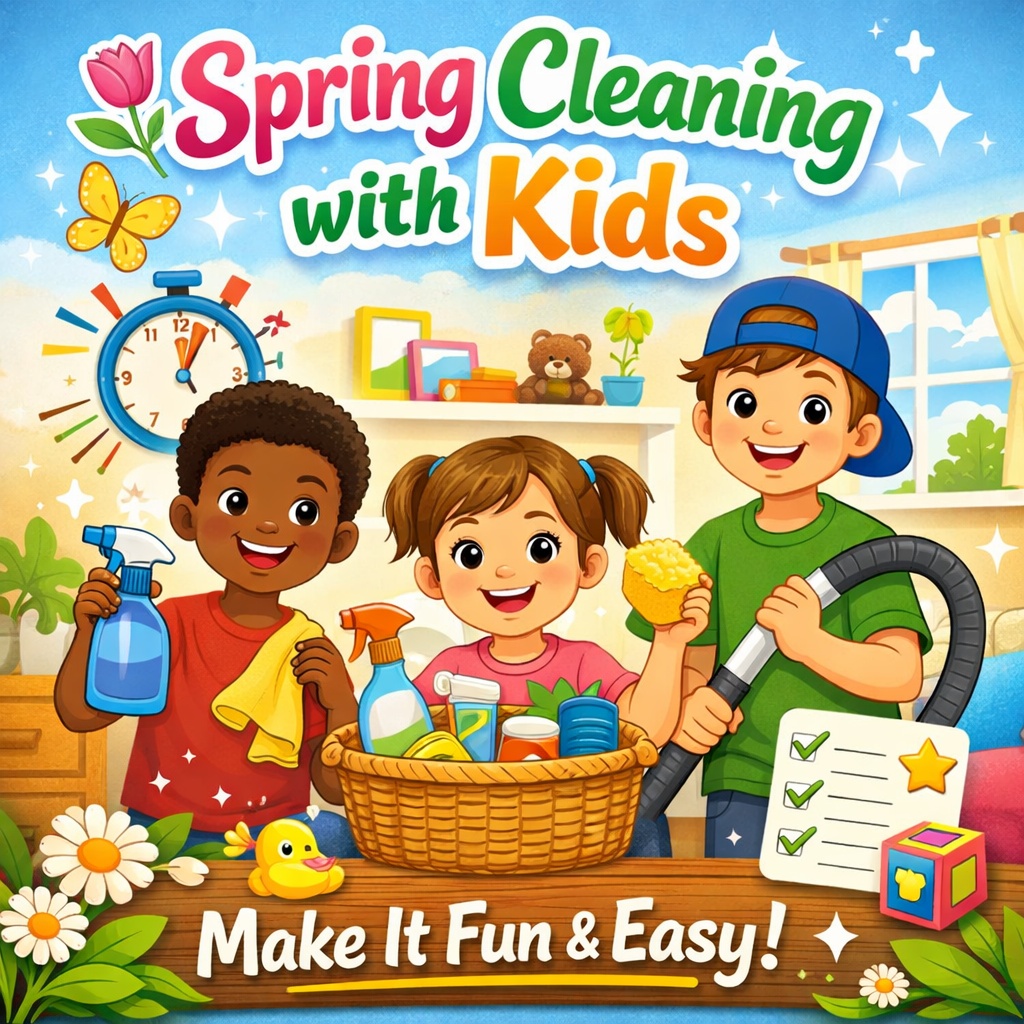

Spring cleaning doesn’t have to mean doing everything yourself while the kids mysteriously disappear into another room. With the right approach, it can become a fun family activity that teaches responsibility, builds habits, and actually gets your home cleaner.
Here’s how to turn spring cleaning with kids into something simple, structured, and surprisingly enjoyable.
🌟 Why Involve Kids in Spring Cleaning?
Kids don’t naturally see cleaning as “fun,” but they do respond well to games, structure, and shared activities. Involving them helps them:
- Learn responsibility and independence
- Build organization habits early
- Understand teamwork
- Feel proud of their space
- Reduce your workload (a big bonus)
The key is not expecting perfection—just participation.
🎮 Turn Cleaning Into a Game
If it feels like a chore, kids will resist. If it feels like a game, they’ll engage.
Try ideas like:
- ⏱️ Timer challenges: “Let’s see how much we can pick up in 10 minutes!”
- 🧺 Color sorting: toys, clothes, or books by color
- 🏁 Race the clock: beat yesterday’s cleanup time
- ⭐ Sticker rewards: earn stars for completed tasks
- 🎯 Treasure hunt cleanup: find hidden items while tidying
Even simple tweaks can make a big difference in motivation.
🧹 Assign Age-Appropriate Tasks
Not every child can do everything—but everyone can do something.
👶 Younger Kids (3–6 years)
- Put toys in bins
- Match socks
- Wipe low surfaces with a cloth
- Help sort laundry by color
🧒 School Age (7–10 years)
- Make their bed
- Dust furniture
- Vacuum small areas
- Organize books and toys
🧑 Older Kids (11+ years)
- Clean their room independently
- Help in kitchen cleanup
- Take out trash or recycling
- Assist with organizing shared spaces
Keep instructions simple and clear—step-by-step works best.
🎶 Add Music and Energy
Music instantly changes the mood. Create a “spring cleaning playlist” and let kids pick some songs.
- Upbeat music keeps energy high
- Dance breaks make it fun instead of tiring
- Singing while cleaning makes time go faster
It may not be silent or perfect—but it will be more enjoyable.
🏆 Use a Reward System (Simple, Not Overcomplicated)
Kids respond well to visible progress and rewards.
Ideas include:
- Sticker charts
- Small treats (extra playtime, favorite snack)
- Choosing a family movie night film
- Points toward a bigger reward
The goal is encouragement, not bribery.
🧺 Make Decluttering a Decision Game
Instead of “throw this away,” try:
- “Keep, donate, or store?” bins
- “Do you still play with this?” questions
- “Would someone else enjoy this more?”
This teaches decision-making while reducing clutter.
🏡 Focus on One Zone at a Time
Trying to clean the whole house at once leads to frustration. Instead:
- One room per day
- Or one category (toys, clothes, books)
- Short, focused sessions (20–30 minutes max)
Kids stay more engaged when tasks feel manageable.
😂 Expect Imperfection (and That’s Okay)
Kids will not clean like adults. Things may be:
- Slightly messy
- Misplaced
- Not “perfectly organized”
That’s normal. The goal is involvement, not perfection.
🌸 Make It a Family Tradition
When spring cleaning becomes a yearly event:
- Kids know what to expect
- It feels less like a punishment
- It becomes part of family routine
- Everyone contributes over time
You can even end the day with a small celebration—pizza night, movie night, or a walk outside.
🌿 Final Thoughts
Spring cleaning with kids works best when it feels light, structured, and fun. With games, music, simple tasks, and realistic expectations, you can turn a big chore into a meaningful family activity.
And the bonus? A cleaner home and kids who are slowly learning how to take care of their space.