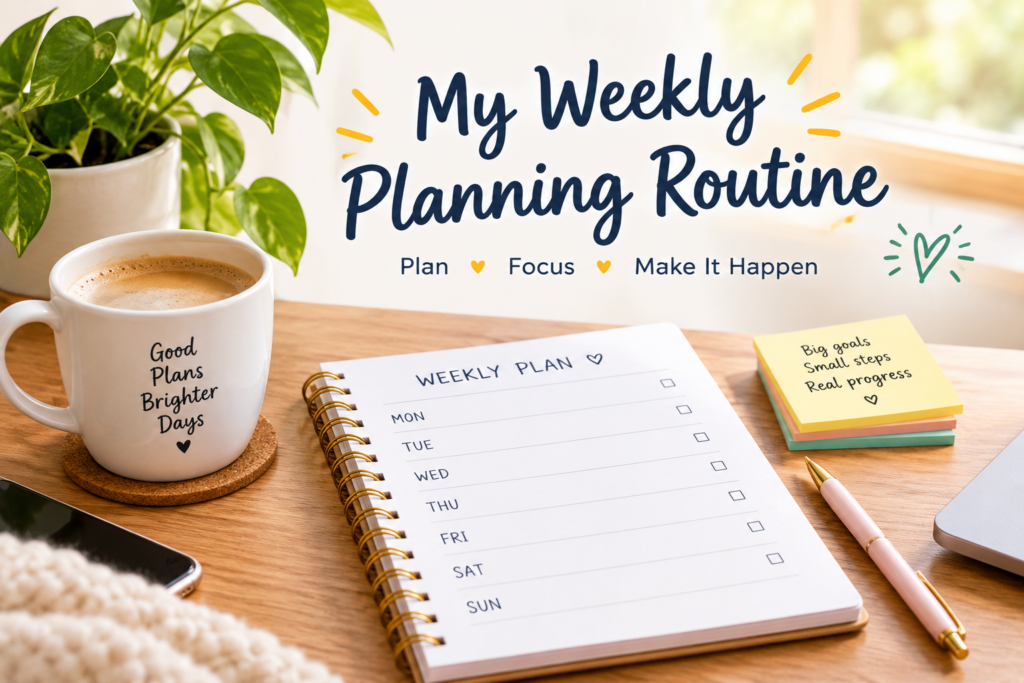

A new week doesn’t have to start with stress, chaos, or a never-ending to-do list. ✨
With a simple weekly planning routine, you can create a clear sense of direction, stay focused on what matters, and make more space for the things you enjoy. 🌿
Here’s the routine I use to start each week feeling organized and in control. 👇
🧘 1. Take 10 Minutes to Reset
Before planning the week ahead, pause and look back at the week that just ended.
Ask yourself:
- What went well? 😊
- What didn’t go as planned?
- What still needs my attention?
- What can I let go of? 🍃
This quick reflection helps you avoid carrying unnecessary stress into a new week.
📝 2. Brain-Dump Everything
Grab a notebook, planner, or notes app and write down everything that’s on your mind.
Work tasks, appointments, errands, personal goals, birthdays, household chores — put it all down. 🧠➡️📝
Don’t worry about organizing it yet. The goal is simply to get everything out of your head.
🎯 3. Choose Your Top Priorities
You don’t need to accomplish everything in one week.
Choose 3–5 important priorities that will make the biggest difference.
For example:
🎯 Finish an important project
🏃 Exercise three times
📚 Read a few chapters of a book
🏠 Organize one area of the house
👨👩👧 Spend quality time with family
Your priorities give your week direction without overwhelming you.
📆 4. Look at Your Calendar
Now check your calendar and add your fixed commitments:
- Meetings 💻
- Appointments 🩺
- Work deadlines ⏰
- Social plans ☕
- Exercise sessions 🏋️
- Family commitments ❤️
Once you see how much time is already spoken for, it becomes much easier to plan realistically.
⏰ 5. Time-Block Your Priorities
Instead of simply writing tasks on a list, decide when you’ll work on them.
For example:
Monday morning: Deep work 💻
Tuesday evening: Workout 🏃
Wednesday: Grocery shopping 🛒
Thursday morning: Project work 🎯
Saturday: Personal time 🌿
Time-blocking turns intentions into actual plans.
🌱 6. Leave Some Empty Space
One of the biggest planning mistakes is filling every minute of the week.
Leave room for unexpected tasks, rest, delays, and spontaneous plans. 🫶
A productive week isn’t one where every minute is scheduled. It’s one where you have enough flexibility to handle whatever comes your way.
💖 7. Plan Something to Look Forward To
Productivity isn’t everything.
Add at least one thing to your week that makes you happy:
☕ Coffee with a friend
🎬 Movie night
🌳 A walk outdoors
🍰 Your favorite dessert
📖 An hour with a good book
🛁 A relaxing evening at home
Having something enjoyable on the calendar can make even a busy week feel lighter.
🌙 8. End With a Quick Sunday Check-In
At the end of the week, take five minutes to review your plan.
Ask:
What did I accomplish? ✅
What needs to move to next week? ➡️
What am I proud of? 💛
What do I want to do differently? 🌱
Remember: your weekly plan is a guide, not a test.
✨ The Goal Isn’t a Perfect Week
Some weeks will go exactly as planned. Others absolutely won’t — and that’s okay.
The purpose of weekly planning isn’t to control everything. It’s to create clarity, focus, and breathing room so you can spend more time on what truly matters. 💫
So grab your planner, make a cup of coffee ☕, put on your favorite playlist 🎶, and give yourself 20–30 minutes to prepare for the week ahead.
A little planning today can make tomorrow feel so much easier. 🌸